 Fredericksburg Energy Guide
Energy Guide · Cost analysis
Home Energy Audit: Is It Worth It for a Fredericksburg Home?
When a paid energy audit earns its fee in a Fredericksburg house, what the instruments find that a walkthrough cannot, and how to spot an audit that is a sales call.
You should buy an audit when the house has stopped explaining itself
The verdict first, because the answer is conditional rather than universal. Buy a professional audit when the house has a problem you cannot locate: rooms that will not hold temperature, a bill out of proportion to the equipment, or a system that runs constantly without any obvious fault. In those cases the fee buys a location, and a located problem is a fixable one.
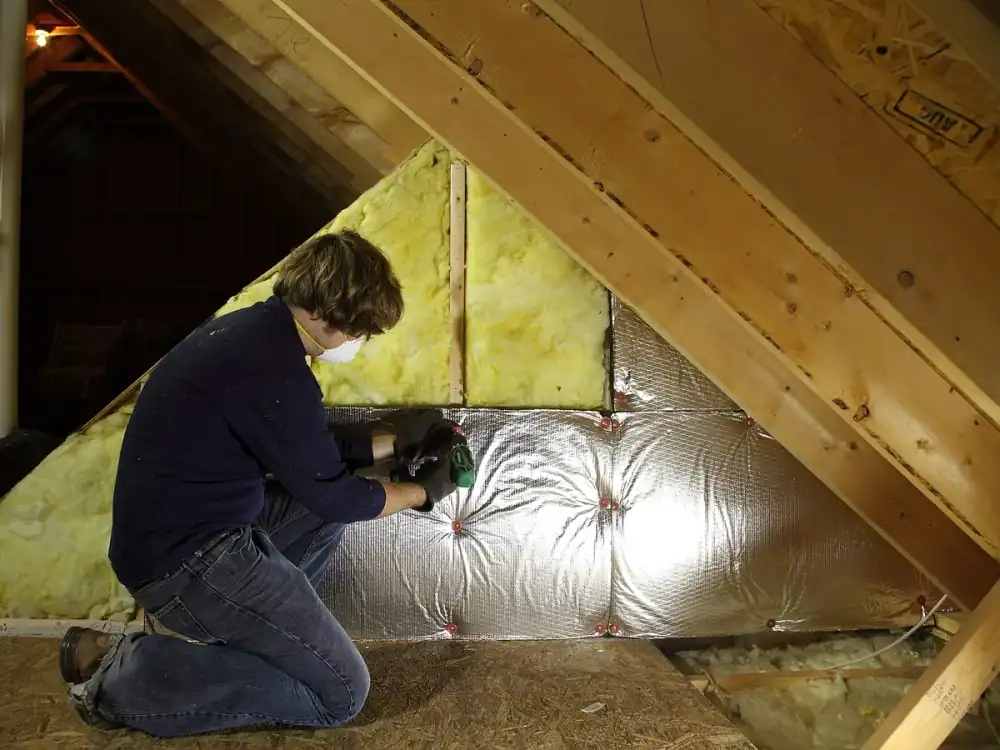
Do not buy one when you already know the answer. A house with visibly thin attic insulation, obviously leaky ducts and original weatherstripping does not need a report to say so. That money belongs in the work itself. The audit is a diagnostic instrument, and instruments are wasted on conditions already visible from the hallway.
The middle case is the common one, and the rule there is simple: if the cheapest measures on your list total less than the audit fee, do those first and see whether the question survives.
You are paying for measurement, not for advice
Advice about home energy is free and abundant. Measurement of your particular house is neither, and that is the entire product.
A walkthrough inspection tells you what a trained person can see. An instrumented audit tells you what the house does under test, which is a different category of information. The distinction matters because the largest losses in most houses here are invisible by design: air moving through cavities, conditioned air escaping into unconditioned space, and heat conducting through surfaces that look fine.
You can expect three instruments to do most of the work
A blower door depressurises the house and measures how much air leaks in, then lets the auditor find where. This converts a vague draught complaint into a ranked list of locations.
An infrared camera reads surface temperature, which reveals missing insulation, wet insulation and thermal bridges through walls that appear finished and sound.
A duct pressurisation test measures leakage in the distribution system specifically, separating duct losses from envelope losses. That separation is the single most useful output for a house in this region, where duct runs so often pass through hostile attic and crawlspace conditions.
Combustion safety testing usually accompanies these, and on a house with an older gas or oil appliance it is worth the visit by itself.
You should ask what the numbers are compared against
An instrument reading means nothing without a reference, and this is where audits diverge in quality.
An air leakage figure should arrive next to a target for a house of that age, volume and construction, so you can see whether yours is ordinary, tight or badly leaky. A duct leakage figure should arrive as a percentage of system airflow rather than as a raw number, because the raw number is meaningless without the system size beside it.
An auditor who supplies the comparison is handing you a decision. An auditor who supplies only the measurement is handing you homework and charging for it.
You can do a useful version yourself for the cost of an afternoon
A homeowner cannot replicate a blower door, but a homeowner can get further than most expect.
Walk the house on the first genuinely cold evening with the back of a hand out, working around window frames, exterior door edges, attic hatches, recessed lights and the point where floors meet exterior walls. Incense or a smoke pencil makes the same information visible rather than tactile.
Measure attic insulation depth with a ruler in several places rather than one, because settled coverage is rarely even. Look at accessible duct joints for dust streaks, which mark where air has been escaping for years. Read twelve months of bills next to the same twelve months a year earlier.
That self-assessment costs an afternoon and typically identifies the two or three largest items. What it cannot do is quantify them, which is the reason the paid version exists.
Write down what you find rather than trusting it to memory, and keep the list on one page. A homeowner arriving at an audit with a written list of observed problems gets a better visit, because the auditor spends the appointment testing specific questions instead of establishing the obvious. It also gives you a check on the report: if the audit misses something you found with your hand and a flashlight, that tells you what the report is worth.
The season matters to the self-assessment as well. Draughts are easiest to feel on a cold windy evening, and duct problems are easiest to notice during a long cooling run in July. Doing both halves at the right time of year costs nothing beyond patience.
You will get a report, and most of its value sits in two pages
A professional audit produces a document, and documents invite padding. Two parts matter.
The first is the measured results: the air leakage figure, the duct leakage figure and the infrared findings with locations. These are facts about your house and they do not expire quickly.
The second is the prioritised recommendation list, and it should be ordered by payback rather than by cost or by convenience. A list ordered any other way is a work schedule for the contractor rather than a plan for the household.
Everything else in the report is context, and context does not have to be paid for twice. Ask before booking whether you receive the raw measurements, and ask whether the recommendations carry estimated savings alongside estimated costs. A recommendation without both numbers cannot be ranked.
You should price the audit against the work it will trigger
An audit produces no savings on its own. It is a cost that unlocks other costs, and it earns its place only when those other costs are worth doing.
Run the comparison honestly. If the audit fee is a small fraction of the work it will identify, it is cheap insurance against spending that money in the wrong order. If the fee approaches the cost of the whole likely remedy, skip it and do the remedy.
Rebates and utility programmes move this arithmetic and change from year to year, so check current terms rather than relying on what was true two seasons ago. Some programmes subsidise the audit itself, which changes the answer for a large number of households. From the reader side, the better question is whether the report will change what you do, not whether the report will be interesting.
You can be sold an audit that is really a sales call
A free audit offered by a company that sells insulation, windows or equipment is a lead-generation visit with instruments attached. That does not make it worthless, but it does mean the recommendation list is not independent, and it will rarely conclude that the cheapest measure is sufficient.
The test is straightforward. Ask whether the auditor sells or subcontracts any of the work they may recommend. An independent auditor answers no and charges a fee. A contractor-affiliated auditor answers yes and often waives it. Both can be honest; only one has no stake in the size of the resulting job.
Ask also for the raw measurements rather than a summary, and treat any reluctance as informative. On the ground, the service angle is that a firm confident in its numbers hands them over without being asked twice.
A second signal is worth watching for. An audit that arrives already knowing its conclusion will spend most of the visit on the one product the company sells, and very little on the ducts, the attic hatch or the crawlspace. A genuinely diagnostic visit ranges across the whole house because it does not yet know where the money is going. If the instruments come out only in the room that supports the pitch, you are watching a demonstration rather than a test.
You are reading the audit primer, and this is its claim
This page is the site's home energy audit primer, and its claim is narrow. It claims that an audit is a measurement purchase rather than an advice purchase, that its value equals the value of the decisions it changes, and that a household able to name its own two largest problems probably does not need one. It does not claim that audits are unnecessary, and it does not claim they are always worth the fee.
You should know when this guide says not to bother
The scope is an owner-occupied single-family house in the Fredericksburg area with a heating and cooling bill the owner considers too high. Rental properties, new construction under warranty and houses about to be sold are all different calculations, and in the last case the work rarely returns its cost to the seller.
The region's older housing stock is the reason audits find so much here; a great deal of it was built long before air sealing was a design consideration, a history documented through institutions like the university in town, its own account of that past, and the collections held at the Simpson Library. The technicians who run these tests are frequently trained nearby at Germanna Community College. None of that changes the rule above: buy measurement when you lack information, and buy the work when you already have it.