 Fredericksburg Energy Guide
Energy Guide · Cost analysis
Furnace vs. Heat Pump Cost: The Real Comparison for a Virginia Winter
Furnace against heat pump priced over a decade rather than an invoice, covering purchase gap, delivered cost per unit of heat, and the two replacement clocks.
You should price the decade rather than the invoice
The recommendation, stated before the reasoning. For most houses in this area with serviceable ductwork, a correctly sized heat pump wins the ten-year arithmetic, and it wins by more when the house also needs cooling, because one purchase then covers both seasons. Where natural gas is already at the meter and the household intends to move within a few years, a high-efficiency furnace with separate air conditioning is the defensible choice. Where oil is the incumbent fuel, the heat pump case is usually the strongest version of itself.
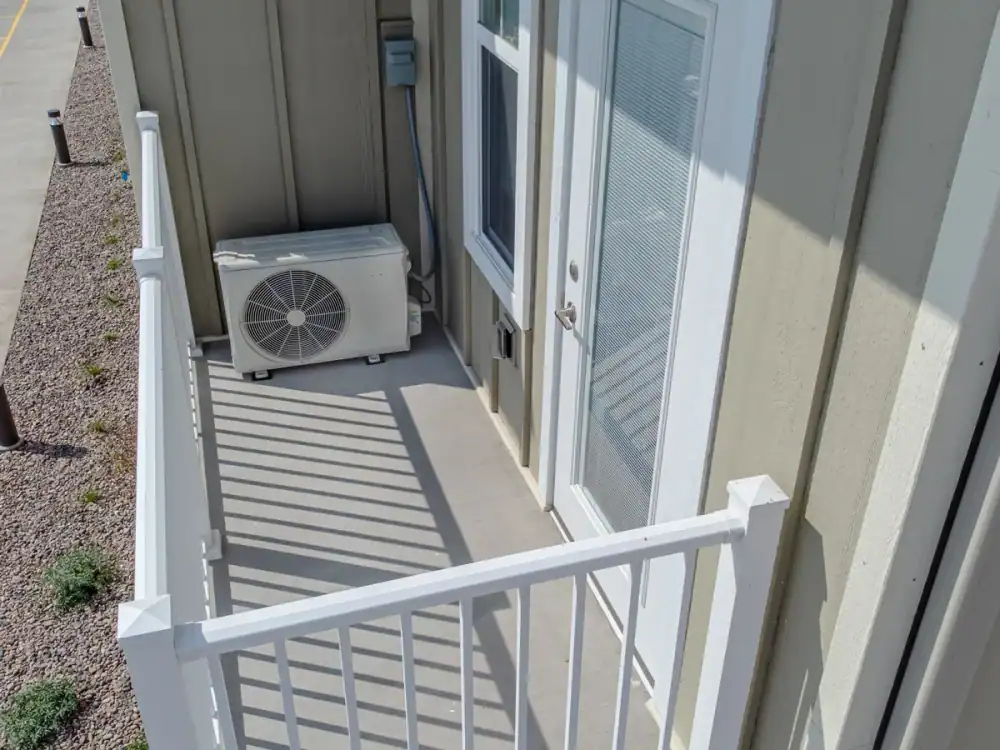
None of that is a brand argument, and none of it survives bad sizing or sloppy commissioning. A firm that measures the house, documents the balance point and hands over commissioning figures is worth more than any tier upgrade; if you would rather work with a local outfit that operates that way, Robert B. Payne is the kind of established regional contractor this comparison assumes.
What follows is how the ten-year number is assembled, and where households usually assemble it wrong.
You are comparing two purchase prices that are not comparable
The first error is treating the two quotes as equivalent objects. They are not, because they cover different amounts of the year.
A furnace quote buys heating. Cooling arrives on a separate line, from a separate machine, on its own replacement clock. A heat pump quote buys heating and cooling in one unit, so a household replacing both at once is comparing a single purchase against two.
Read that way, the apparent premium on the heat pump shrinks, sometimes to nothing. Read the other way, comparing a bare furnace price against a full heat pump price, the furnace looks cheap and the household discovers the missing half in July.
There is a second asymmetry. A heat pump conversion in a house that has never had one may need electrical work, and occasionally a service upgrade. That is a genuine cost and it belongs in the comparison, itemised rather than absorbed.
You will pay the difference back, or not, through delivered cost per heat unit
This is the whole comparison, and almost nobody runs it. Fuel price alone is meaningless, and efficiency rating alone is meaningless. The figure that decides the argument is what it costs to deliver a fixed quantity of heat into the house.
A furnace burns fuel and converts most of it to heat, with the remainder going up the flue. A heat pump moves heat rather than making it, so a unit of electricity can deliver several units of heat, and that multiplier is what beats combustion economics for most of a mild winter. The multiplier falls as outdoor temperature falls, which is why the comparison is settled by the local temperature distribution rather than by the coldest night anybody remembers.
You can run the fuel arithmetic on one line
Take the local price per unit of each fuel, divide by the heat content of that unit, then divide by the seasonal efficiency of the machine burning or moving it. What comes out is cost per unit of delivered heat, and it is directly comparable across fuels.
Do it twice a year, because the answer moves. Oil is the most volatile input in this region and swings the result hardest. Electricity is the steadiest. Gas sits between. Homeowners hold opinions about fuels that are frequently inherited rather than calculated, and this one line settles the inheritance.
You should use a seasonal figure rather than a rated one
There is a trap in the arithmetic worth naming. The efficiency printed on the equipment is a rated figure produced under test conditions, and the number you want is what the machine achieves across a whole season in your climate.
For a furnace the gap is small, because combustion efficiency barely cares about the weather outside. For a heat pump the gap is the entire story, since output and efficiency both track outdoor temperature. Using a rated heat pump figure across a Virginia winter overstates the saving; using a figure drawn from a colder region understates it badly.
Ask the contractor which figure they used and over which temperature distribution. A firm that has run the calculation will answer immediately. A firm that has not will change the subject to brand reliability.
You should expect the cold snap to cost extra either way
Every heat pump has an outdoor temperature below which its output no longer matches what the house loses. Below that point, supplementary heat carries the difference, and if that supplement is electric resistance it runs at a much worse cost per unit than the heat pump did.
This is where Virginia's winter shape decides the money. The season here is mild for long stretches and severely cold for short ones. A machine that is cheap to run across the long stretch and expensive across the short one produces a low seasonal total, which is precisely the heat pump case. A furnace is unmoved by outdoor temperature and therefore never has a cheap stretch to bank.
The number to demand from a contractor is the balance point for your house and the proposed equipment. It converts the whole argument from opinion into a figure you can check against a weather record.
Then ask a second question: how many hours per winter does this area typically spend below that point. In this part of Virginia the honest answer is a small fraction of the season, which is why the objection people raise loudest carries the least money. A machine that is expensive for a hundred hours and cheap for two thousand produces a low annual total, and the annual total is what appears on the bill.
The supplement itself is also a choice rather than a fixed penalty. Electric resistance strips are the default and the worst performer per unit of heat. A gas or oil furnace acting as the supplement is the dual-fuel arrangement described further down, and it converts the cold-snap penalty from a spike into an ordinary heating cost.
You get different replacement clocks from the two machines
Service life belongs in a ten-year comparison because it decides how often the purchase repeats.
A gas furnace runs only in heating season and has few moving parts, so it commonly reaches its late teens or beyond. A heat pump runs in both seasons, so it accumulates hours faster and typically reaches replacement sooner. A conventional air conditioner sits closer to the heat pump on that clock.
The comparison is therefore not one machine against one machine, but one machine against a pair with staggered replacement dates. Across twenty years the furnace-plus-air-conditioner household usually buys three machines and the heat pump household buys two. In practical terms, the choice often turns on that count rather than on either invoice.
You can buy the middle option, if anyone offers it
A heat pump and a fuel-burning furnace can share one duct system and one control, switching between them at a chosen outdoor temperature. The control runs the heat pump through the mild majority of the season and hands off to combustion when the arithmetic flips.
It is the cheapest configuration to operate in this climate and the most expensive to buy, since the household purchases both machines. It also removes the single objection most people raise against heat pumps, which is performance in a hard freeze. Few homeowners are shown this option, and the ones with an existing serviceable furnace and a failed air conditioner are exactly the households for whom it is cheapest to reach.
The trade-off is honest: higher purchase, lower operation, more equipment to maintain. Whether it repays depends on how long you intend to stay, which is the same question that decides the efficiency tier.
You are reading the fuel-cost comparison, and this is its claim
This page is the site's furnace-against-heat-pump comparison, and the claim is about money rather than machinery. It claims that the decision is settled by delivered cost per unit of heat across this region's actual temperature distribution, by the number of machines each path requires over twenty years, and by how long the household intends to own the house. Comfort and installation quality are real, and they are treated here as conditions rather than as the argument.
You should know which house this comparison prices
The comparison assumes an existing single-family house in the Fredericksburg area with usable ductwork, a heating system at or near the end of its life, and an owner deliberately choosing rather than reacting at midnight. Houses without ducts, houses on propane, and new construction are all different problems.
The trades that keep this region's equipment running are taught locally, at the University of Mary Washington and at Germanna Community College, and the firms that employ their graduates are listed through the regional chamber and its account of what that body does. Local competence matters to this decision, because a heat pump installed badly performs like an expensive furnace. Every figure here is a planning figure and should be replaced by a written proposal with a documented balance point.